Estriol and estradiol, two bioidentical estrogens in a topical cream, prescribed by a U.S.-licensed physician for perimenopause and menopause symptoms.
Start your visit See full pricing
Refunded in full if a physician doesn't approve you
Estriol and estradiol, two bioidentical estrogens in a topical cream, prescribed by a U.S.-licensed physician for perimenopause and menopause symptoms.
Refunded in full if a physician doesn't approve you · Licensed in 50 states
Estriol (E3) and estradiol (E2), both structurally identical to the estrogens your body makes.
A once-daily topical cream absorbed through the skin, delivered in a metered-dose pump.
Prepared by a licensed 503A compounding pharmacy at the strength your physician sets.
"Bi-est" means two estrogens. The two numbers you will see, 80/20 or 50/50, are the ratio of estriol to estradiol, not the strength. Strength is set separately in milligrams per gram. Therisse's standard starting formulation is biest 80/20 at 2.5 mg/gm, a deliberately conservative starting point, because with compounded creams the more common problem is under-treatment, not over-treatment. If relief is incomplete, the clinical move is to step the strength up.
The ratio is the estriol-to-estradiol mix
Estriol (E3) is the weaker estrogen; estradiol (E2) is the stronger, more active one. A higher share of estradiol means a stronger relative mix. The overall strength (mg/gm) is a separate setting your physician chooses.
How estrogen enters your body changes its blood-clot risk. Estrogen applied to the skin skips the liver "first pass" that drives clotting factors.
Blood-clot (VTE) risk versus women not using hormone therapy, by route
Source: Scarabin et al., the ESTHER study, The Lancet (2003). Odds of a venous blood clot in current hormone users versus non-users. Oral estrogen was associated with higher clot risk; transdermal estrogen was not. This is observational data, and the evidence base for compounded creams specifically is limited. Biest cream still carries estrogen-therapy risks, and individual risk depends on your history.
A measured pump of cream applied to clean, dry skin, usually the inner forearms or inner thighs.
Early hot-flash relief is often felt within three to four weeks. If symptoms persist, raising the strength is the standard next step.
If you still have a uterus, estrogen is paired with progesterone to protect the uterine lining.
Rotating application sites and applying to clean, dry skin helps with more consistent absorption. Your physician reviews how you respond and adjusts the strength over time, and you can message your care team between check-ins whenever something feels off.
Estrogen therapy carries real, established risks. We would rather you read them here than find them in the fine print.
The more common, milder side effects usually settle as your body adjusts or the dose is refined: breast tenderness, spotting or breakthrough bleeding, headache, nausea, skin irritation where you apply it, and bloating. There is no good evidence that biest cream reliably causes weight gain; menopause itself shifts body composition, which is often what gets blamed on the cream.
The serious risks are the established ones for estrogen-containing hormone therapy: blood clots, stroke, and breast cancer. Risk depends on your age, health history, the type and route of hormone, and how long you use it. A physician reviews your history, including any personal or family history of clots, stroke, or hormone-sensitive cancers, before prescribing.
On the evidence: compounded creams are not standardized the way an FDA-approved patch is. The one randomized pharmacokinetic trial most often cited (Sood et al., Maturitas, 2013) found compounded creams generally delivered less estradiol into the bloodstream than a standard patch. That is the practical reason a conservative starter is titrated upward rather than assumed to be "enough."
One thing we state plainly: compounded biest cream is not FDA-approved. The active ingredients (estradiol and estriol) are long-established, but the compounded preparation itself is made for an individual patient and is not reviewed by the FDA as a standardized product. Major bodies, including ACOG and The Menopause Society, prefer FDA-approved hormone therapy where an equivalent option exists.
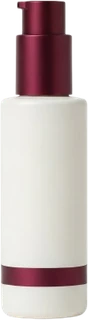
Both estrogens in it, estriol and estradiol, are structurally identical to the hormones your body makes, so it is bioidentical. But "bioidentical" is not the same as "FDA-approved." Compounded biest cream is not FDA-approved; the FDA approves certain estradiol products, but not compounded creams, which are made for an individual patient.
The ratio of estriol to estradiol. 80/20 is mostly the weaker estrogen (estriol); 50/50 has an equal share of the stronger estrogen (estradiol). Strength, written in mg/gm, is set separately from the ratio. Therisse's standard start is 80/20 at 2.5 mg/gm.
Relief is gradual, not overnight. Early hot-flash relief is often felt within three to four weeks, and if symptoms persist past that, raising the strength is a standard next step. Sleep and mood changes can take longer. Response varies widely, which is why follow-up and dose adjustment matter.
If you still have your uterus, yes. Estrogen on its own overstimulates the uterine lining and raises the risk of endometrial cancer, so it is paired with progesterone for protection. If you have had a hysterectomy, estrogen alone is the standard. Our intake asks about your uterus status because it genuinely changes the prescription.
What it is, how the ratios and doses work, what the safety evidence shows, and where it is genuinely thin.
Read the article →The honest comparison of a customizable compounded cream against a standardized, FDA-approved patch.
Read the article →Who needs it, who doesn't, how it's dosed, and the honest risks of combined hormone therapy.
Read the article →Two minutes to start. 24 hours to a decision.
Answer a few questions and a licensed physician takes it from there.
Start your visit